Attending the Teen Signal workshop-My takeaways about adolescence and communication
- Student Leader - Kwun Yee Eva Cen (age 16) - based in IL

- 17 hours ago
- 3 min read
After attending the Teen signal workshop led by NIF’s guest speaker Minyue Zhai, who has had more than 20 years of experience in mental health counseling, I’ve gained a nuanced understanding about the stage of adolescence and the reasons behind patterns of teenagers’ behaviors. Through discussing various topics including signs of adolescence and how it shapes emotional changes along with advice for parents when communicating with their kids, Zhai
uncovers the biological, psychological processes that gave insightful reflections to not only attending parents, but also myself as a student journalist.
To begin with, one of the most significant takeaways for me was getting to learn about the teenage brain. Minyue Zhai started the session with a thorough presentation about the relationships between teen emotions and their brain components. She referred to the amygdala as the ‘accelerator’ and the prefrontal cortex’s function as a ‘brake’. These ideas helped me see why people of my age can often react comparatively emotionally and impulsively. Particularly, the fact that the prefrontal cortex does not fully mature until a person’s mid-20s was refreshing to me as it means that most students still have improving spaces for comprehensive decision-making skills and consequence-examination skills, which largely influences their performance no matter academically or socially. This awareness reframed my perspective: Instead of judging the seemingly childish or irrational choices we as adolescents make in lives, we should view them as narratives that naturally occur with developmental opportunities.
Building upon this foundation, Zhai further reinforced the neurological and cognitive shift during puberty that are linked to synaptic pruning, myelination, and dopamine sensitivity. These concepts showed how teenage brains are under essential constructions. Extending this analysis, it becomes evident that teenagers’ increased responsiveness and peer validations underscore the
intensity of risk-taking behaviors, as well as the pursuit for social belonging. Minyue Zhai also mentioned her own example with her daughter when they once had a conflict. She shared how her daughter reacted relatively extremely in their argument and suggested through this instance to the parents who were listening that similar problems can even happen to herself as a family relation counselor. Therefore, I’ve come to realize some of the causes for my impatience when talking to my parents that I wasn’t clear about myself before the session. This enhanced my motivation to try rethinking before communications in order to prevent saying things I don’t mean to in the future.
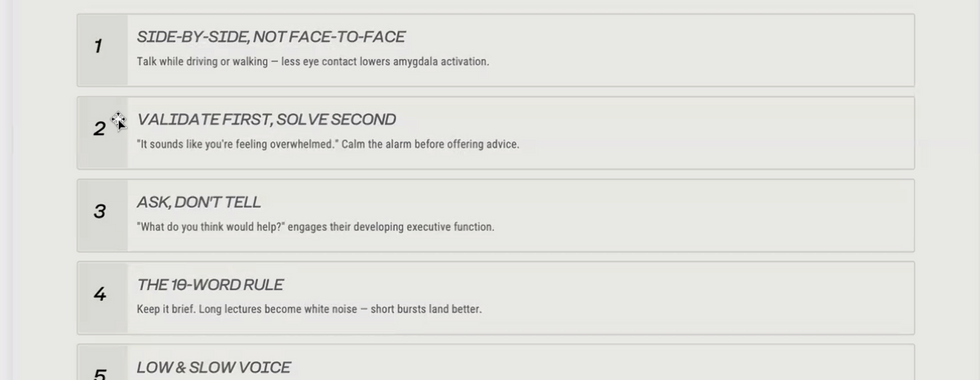
Finally, central to Zhai’s talk was her suggestions to all parents when interacting with their children in adolescence. ‘We as Asian parents tend to make choices for our kids,’ she stated in her speech. However, Zhai indicated that there is an inevitable disparity between the generations of parents and teenagers that makes some of the experiences adults believe in unapplicable to corresponding cases for their kids. My comprehension of some of the advice like ‘validate first, solve second’ and ‘ask, don’t tell’ emphasizes the importance of changing perspectives and listening rather than immediate criticism and corrections. As a student, this approach made me feel genuinely respected and cared for. In some of my real-life cases, I could envision the effectiveness of communication when my parents followed principles like ‘lowering their voice when I increase my volume.’ The sense of assurance and calmness are crucial to form a
negotiation with inclusiveness rather than an argument with incompatibility.
In summary, the Teen Signal workshop offered me valuable insights combining scientific explanations of adolescent brains and practical recommendations which made me feel embraced. As a student journalist, it inspired me to interpret peer behaviors with understanding and approach conversations in the future with empathy and self-recognition. On top of that, I was taught to walk in other people’s shoes when talking as the root of conflict often lies within misunderstandings, not intent.